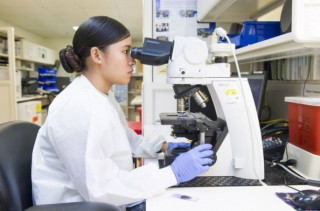
Alice Siwoo's Story
지금은 테스트 중인 페이지 입니다.
This is not a drill! We need to come in strong and UNITED at the first Global Plastics Treaty Negotiations
  • AliceKim
  • 2022.11.18 23:04:40
  • 조회 수: 65

This is not a drill! We need to come in strong and UNITED at the first Global Plastics Treaty Negotiations

by Linda Rodríguez

November 14, 2022

Join us in demanding the United States be a bold and influential voice in Global Plastics Treaty negotiations!


At this point, pretty much everyone agrees that plastic pollution is a problem. After years of campaigning, we have a historic opportunity to finally end the age of plastic! The first Intergovernmental Negotiating Committee (INC1) to develop an international legally binding instrument on plastic pollution, including ocean plastics, will bring together 196 countries in Uruguay between November 28th – December 2, 2022, to create a Global Plastics Treaty. Isn’t that great?! It’s this plastics campaigner’s dream!

So, what’s on my wish list?

We cannot recycle our way out of the plastics crisis. To date, it is estimated only 9% of all the plastic ever produced was recycled, and production is projected to increase in the years to come. We will never be able to solve this crisis with just waste management and cleanups.

The idea that plastic recycling can solve the plastic pollution crisis is a lie pushed by Big Oil. As we kick off the first of five conferences to negotiate this potentially game-changing treaty, we need to see the USA, one of the world’s leading plastics polluters and an influential voice in this negotiation, come in strong with two main priorities:

  1. An immediate cap on virgin plastic production to 2017 levels, followed by significant, annually increasing reductions in the production and use of plastic.

  2. An end to single-use plastics, starting with the most unnecessary and harmful.

A strong, UNITED position on this treaty will help us protect our planet and support Frontline communities — often low-income communities of color — which bear the greatest impacts from the toxic extraction, production, disposal, incineration, and the so-called chemical recycling process.


As we negotiate for a strong global plastics treaty that will address the full life cycle of plastics, which includes toxic extraction, production, disposal, and incineration or remediation. It is also critical that this treaty ensures a just transition for workers in the fossil fuel industry and waste workers and their communities across the globe who are doing the difficult and sometimes dangerous work for corporations in cleaning up their plastic waste.

Yvette Arrellano of Fenceline Watch said, “What do you do when you have so many generations that have been exposed to a problem? We’ve all felt our communities begin to lose hope. And that’s why we are here; that’s why we are gathering.

Their words inspire us, and we hope you are inspired too.

Here’s how you can help!

  1. Week of November 14th: Join the TwitterStorm and tell President Biden that we need a bold and just Global Plastics Treaty.

  2. Sign the petition demanding the Biden Administration champion a bold and binding Global Plastics Treaty! 


Thank you for making this movement stronger!

Send Message


Linda Rodríguez

By Linda Rodríguez

Linda Rodriguez is an Oceans Plastics Campaigner from Southern California. She focuses on connecting the dots between our health, justice, and Plastics while building alliances through our campaigns to take a stand for a just, equitable, sustainable, and peaceful future.

이 게시물을

Top Five Careers You Can Pursue with a Mechanical Engineering Degree
  • AliceKim
  • 2022.11.17 12:47:43
  • 조회 수: 76

Top Five Careers You Can Pursue with a Mechanical Engineering Degree


211212.jpg


JANUARY 27, 2021 VAUGHN SPOTLIGHTS

Investing in your education is the first step toward a successful career. For engineering majors the field is wide open, as there are job opportunities across many industries. Here, we explore the many careers you can pursue with a mechanical engineering degree. But first, let’s discuss what mechanical engineers actually do.

The role of mechanical engineers

Look around you. Nearly every machine or process you see has been influenced in some way by a mechanical engineer. As one of the broadest engineering disciplines, mechanical engineers perform tasks that range from the planning and designing of tools, engines and mechanically functioning equipment to the generation, distribution and use of energy—and so much more. Even your refrigerator and microwave are possible thanks to mechanical engineers. (Who knew?) Today’s industry trends have opened up a world of exciting career opportunities. Here are our picks of the top five mechanical engineering careers:

1. Biomedical engineer

If you’ve ever had an MRI (Magnetic Resonance Imaging) or a dental implant, then your life has been touched by the work of a biomedical engineer. This fascinating area of engineering is diverse as it combines biological sciences with engineering design. The role of biomedical engineers is to improve the quality of human life while advancing healthcare. Their work has aided the efforts of doctors in the assessment, diagnosis and treatment of a scope of medical conditions. Here are just some of the products biomedical engineers create:

  • Prosthetic limbs

  • Wearable technology

  • Implantable drug delivery systems

  • Dialysis machines

  • Injectable nanorobotics

  • Large full-body imaging

In addition to the broad scope of jobs performed by biomedical engineers, the area of working with biomaterials is just as critical to today’s healthcare. Here are some examples of engineered materials that are changing the lives of patients:

  • Implants

  • Stents

  • Artificial organs

  • Pacemakers

  • Dental products

Read more about this exciting topic in our blog: How Medical 3D Printing is Advancing the Healthcare Industry.Viewer

2. Sustainable engineer

In a time when sustainable energy is at the forefront of our environmental agenda, the demand for sustainable engineers is on the rise. The role of sustainable engineers is to redesign and retrofit existing systems by applying the principles of engineering and design, and analyzing current operations, production quality and deficiencies. The goal is to accomplish this in a way that has a positive effect on social and economic development balanced with limited impact on the environment, and without depleting materials for future generations. Some examples of sustainable design include:

  • Geothermal construction

  • Solar and wind-powered lighting, heating and cooling systems

  • Waste, heat and water recovery systems

3. Automotive engineer

There’s so much more to automobiles than filling the gas tank and checking the oil and tire pressure. Most of us don’t think twice about the design and inner workings of our cars; we just want to get to where we’re going. Automotive engineers are the professionals “behind the scenes” who work in all aspects of vehicle design and performance. They design the systems and mechanisms of prototype cars and also ensure that these vehicles are built within the parameters of quality and cost-effective materials. Automotive engineers are responsible for analyzing and resolving any design problems and overseeing their manufacture. Here are some other key skills and requirements that aspiring automotive engineers need in order to land the job:

A special shout out is in order for Vaughn graduate, Niki Taheri ’19, for landing her dream job at Volvo Trucks Technology in Greensboro, NC. Way to go, Niki! In addition, the automotive industry will continue to generate new engineering jobs with advancements in electric cars and autonomous (self-driving) vehicle technology.

*It is advised to consider an institution, such as Vaughn College, that offers a mechanical engineering program that is ABETViewer-accredited, since few institutions offer bachelor’s program specifically for automotive engineering. ABET accreditation ensures that programs meet standards to produce graduates ready to enter critical technical fields that are leading the way in innovation and emerging technologies.

4. Construction/structural engineer

Did you ever cross a bridge and wonder: “How did they build that?” These marvelous structures are possible thanks to the ingenuity and amazing design, problem-solving and analytical skills of construction or structural engineers. These professionals possess excellent communication and leadership skills, and must pay close attention to detail. Construction engineers play a key role in the successful design, execution and maintenance of load-bearing structures including:

  • Railroads

  • Roadways

  • Buildings

  • Drainage and sewer systems

Construction engineers specialize in particular types of projects. These specialties include:

  • Building commercial housing or buildings

  • Electrical systems

  • Mechanical systems such as plumbing, heating and cooling systems

  • Highway or heavy projects that include bridges, airports, highways or water-waste systems

5. Civil engineer

A civil engineer may seem similar to a construction engineer, as the two careers involve the design and construction of buildings, roads and bridges. The difference between the two is that a civil engineer works in a more STEM (science, technology, engineering and mathematics)-focused field that involves environments where people live. In addition, the civil engineer does more of the designing where the construction engineer specializes in on the on-site implementation of the plans created by the civil engineer. A civil engineer ensures that the design meets federal, state and local building codes.

There are several specialty areas of civil engineering, all of which require a solid foundation and knowledge in math, physics, design, economics and even materials science. Some examples of these specialty areas include:

  • Architectural engineering

  • Water resource engineering

  • Transportation engineering

  • Geotechnical engineering

Civil engineers typically design large projects. Some examples of these projects include:

  • Subway systems

  • Tunnels

  • Dams

  • Water supply networks

As you can see, engineering is all around us. What field of mechanical engineering interests you? Discover how a mechanical engineering degreeViewer from Vaughn College can set you on a futureproof path to success. ApplyViewer today!

POSTED IN: VAUGHN SPOTLIGHTSVIEWER, // TAGGED: MECHANICAL ENGINEERING CAREERSVIEWER,


이 게시물을

Computer science has a racism problem: these researchers want to fix it
  • AliceKim
  • 2022.11.14 13:20:13
  • 조회 수: 55

Computer science has a racism problem: these researchers want to fix it

 
Juan Gilbert standing in a hallway with a wall art installation behind him, in February 2013.

Computer scientist Juan Gilbert has been working to make his field more diverse.

Juan Gilbert felt alone as he pursued a PhD in computer science in the 1990s. It was a familiar sense that had followed him throughout his university years, as a student from modest means and the first of his family to pursue higher education.

But there was something else that weighed on him during his doctoral training at the Ohio State University in Columbus, one of the largest academic institutions in the United States. Despite the size of the university, there were no people who looked like him in the computer-science graduate programme or among the department’s faculty members.

“I didn’t see another Black person in computer science until more than a decade after high school,” says Gilbert.

He contemplated leaving the field entirely until a Black professor at another university encouraged him to find another programme instead.

Gilbert transferred to the University of Cincinnati in Ohio, where he built a community of other Black PhD students. But his ‘a-ha’ moment came when he joined the computer-science faculty at Auburn University in Alabama, where there was one other Black faculty member and two Black PhD students in the department. It clarified something for him he feels should have been obvious: all across the country, there were Black PhDs just like him who were struggling with isolation just like him, enduring microaggressions just like him and fighting the urge to quit, just like him.

With that realization, he pledged to help create a more supportive and inclusive computer-science environment for Black students, and has continued that work as chair of the Department of Computer & Information Science & Engineering at the University of Florida in Gainesville. He thinks that vision is why the university ranks top in terms of the number of computer science PhDs awarded to Black students, and why it boasts the largest proportion of Black computer-science faculty members at any predominantly white institution in the United States.

Why diversity matters

There are diversity gaps in computer science and in science, technology, engineering and mathematics (STEM) subjects in many countries. The problem is particularly acute in the United States, which spends much more than any other country on research and development and is home to many of the largest technology companies. Despite being a global leader in computer science, the United States has long struggled to increase diversity in this area.

Computer occupations make up one of the fastest-growing employment sectors in the United States, and the US Bureau of Labor Statistics projects that the number of jobs in this area will increase three times faster than the average — and faster than many other fields in STEM. But Black, Latino and Indigenous people remain under-represented in computing jobs. Black and Hispanic people make up almost 13% and 18% of the US workforce, but they hold only 7% and 8%, respectively, of the jobs in computing. (The US government considers ‘Hispanic or Latino’ an ethnicity and that people of Hispanic or Latino origin may be of any race.)

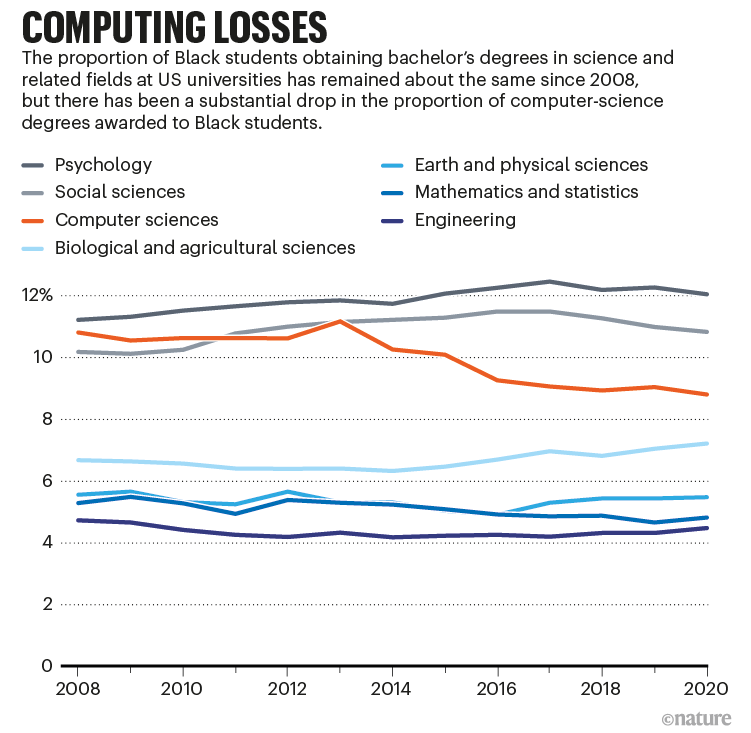
The diversity gap is growing at universities. For bachelor’s degrees, the primary degree granted by US universities, the proportion of computer-science degrees going to Black students has dropped from more than 11% in 2013 to less than 9% in 2020 (see ‘Computing losses’).

Computing losses: graph that shows the drop in the proportion of Black students obtaining bachelor's degrees in computer science

Source: Natl Sci. Foundation

That’s a problem, says Gilbert, because computer science is now so fundamental to everything.

“Computing is in health, transportation, education, finance, you name it — computing is there,” he says. “And recent reports have found that, when you have a lack of diversity, computing implementations can have a bias that disproportionately affects certain [marginalized] people in a very dramatic way.”

That belief also drives Shaundra Daily, an electrical and computing engineer at Duke University in Durham, North Carolina. “When you leave people out of the thought, design, development and policy — and all the pieces that are important to make sure that we have equitable technologies — you end up with technology either not helping or effectively harming minoritized populations,” she says.

Algorithms are perhaps the clearest example. They are supposed to make predictions or complex decisions about everyday life without the taint of human emotion or prejudice, say computer-science specialists.

Portrait of Shaundra Daily.

Shaundra Daily aims to change the student environment to encourage broader participation.Credit: Duke University

“All data science is political,” says James Mickens, a computer scientist at Harvard University in Cambridge, Massachusetts. “A lot of engineers and non-engineers think that math, science and engineering are somehow detached from values or, because we’re dealing with numbers, the decisions are morally neutral. That’s just not true.”

Based on who builds algorithms, how they’re developed and how they’re used, they can and sometimes do replicate the very biases that they were designed to overcome, says Mickens.

Beyond the issue of algorithmic bias, businesses are finding financial reasons for increasing diversity along gender, racial and ethnic lines. “The most diverse companies are now more likely than ever to outperform non-diverse companies on profitability”, according to a 2020 report by the global management-consulting firm McKinsey and Company1Viewer. Diverse teams are also more productive and creative, and bring different perspectives, says Mickens. Famously, non-diverse teams gave us seat belts that are not designed for pregnant people; facial recognition software that doesn’t recognize or misidentifies people of colour; and autonomous vehicles that cannot recognize darker-skinned pedestrians.


In the past few years, however, commitments and pledges from the tech industry on diversity have amounted to very little, according to a 2022 report2Viewer from the non-profit Kapor Center and the NAACP, a civil-rights organization headquartered in Baltimore, Maryland. The current share of Black talent in technical roles has increased just 0.6% since 2018, it notes.

Freeman Hrabowski, former president of the University of Maryland, Baltimore County (UMBC) in Baltimore, gained an international reputation for success in preparing students from under-represented backgrounds to enter STEM fields. Of all US universities, UMBC awarded the most undergraduate degrees to Black students who went on to earn doctorates in this area.

In 2011, Hrabowski chaired a panel for the National Academies of Sciences, Engineering, and Medicine, and at that time only 2.2% of the PhDs in the natural sciences and engineering went to Black people. Ten years later, he says, that number is 2.3%. “With all the initiatives, we still are not at 3%. We have failed to move the needle,” says Hrabowski.

These much-vaunted initiatives have also failed to diversify the computing and technology work sector. Hrabowski spoke to about 2,000 employees this year at a major tech company, where the few employees of colour were doing the kinds of menial job that their parents would have done 50 years earlier. “For the most part, they were on the bottom rung. They were not professionals. I kept it real when I spoke to them and repeated what we all know now, which is that there are far too few people of colour in those companies.”

Hrabowski, Daily and Gilbert are among the many educators and computer scientists working to change the trajectory at universities and tech companies for Black people and other under-represented minority groups. They are realistic about the challenges but think that change is crucial — and possible.

Where to begin

Hrabowski says structural racism in academia hinders the nation’s ability to deal with some of its biggest challenges. To remedy or even mediate tech’s diversity problem, he says, academics and stakeholders must first acknowledge and then confront bias in all aspects, from university admissions to recruitment, hiring and promotion.

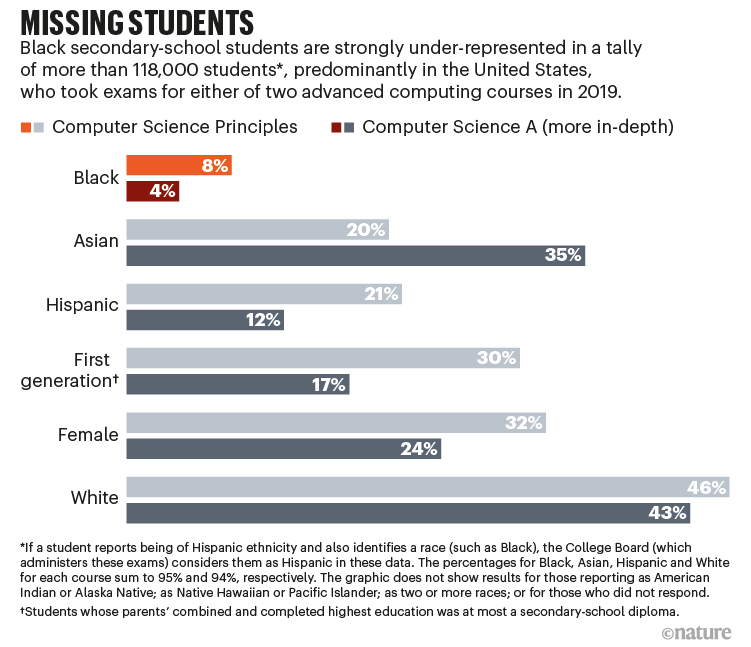
When it comes to succeeding in computer science, the tech talent pipeline starts early — and so do the disparities in access and outcomes. Many students from under-represented groups face structural and social barriers in both exposure and access to computer science from the beginning of their educational voyage (see ‘Missing students’). The Kapor–NAACP study reports that almost one-quarter of Black students lack access to computers or reliable high-speed Internet at home, and that just 75% of Black students go to schools that offer foundational computer-science courses. These kinds of courses, says Mickens, are essential to improving the number who graduate with STEM degrees.

Missing students: a graph that shows how Black secondary-school students are under-represented in two advanced computing courses

Source: College Board

“People always talk about pipeline issues, but the pipeline needs to be throughout a student’s entire academic life,” he says.

Alejandra Diaz was fortunate enough to have access to computer science at her high school in Middletown, Maryland, but there was very little diversity among the 1,100 students. “I was a minority in all my classes and in computer science. I was also the only girl,” she recalls.

She wanted something different for college. UMBC rose to the top of the list as much for its diversity as its reputation as a STEM powerhouse. She was accepted to all three of the university’s elite science fellowships. But Diaz says she still experienced microaggressions and scepticism about her capabilities, which she attributes to being a Latina.

“There were a lot of times where I felt like I had to prove myself to be equal — mostly to my peers and in upper-level classes,” she says. “Like they’d be explaining a concept and then look directly at me and say, ‘Do you understand?’ It’s very frustrating.”


Students from under-represented backgrounds frequently report feeling marginalized or dismissed. Yet Daily says that, too often, well-intentioned advisers and programmes make students of colour feel as if they are to blame.

“Many of the efforts to broaden participation in computing try to change the students instead of their environments. They focus on their deficits and what they are lacking, without paying attention to the toxic spaces they are in. That’s just setting them up for trauma or failure,” says Daily. “We have to think holistically about the people, policies and practices that create barriers for well-qualified students who could otherwise thrive.”

Victor Mbarika, an information and communications-technology researcher at East Carolina University in Greenville, North Carolina, says getting more Black and brown professors into classrooms would improve retention rates for students of colour. But that shift could be difficult to achieve. In an unpublished study last year, Gilbert surveyed the 194 PhD-granting computer-science departments in the United States, and found that there were only 106 Black computer-science faculty members at 70 institutions, leaving more than 60% of the universities without any Black faculty members in this area.

Part of the problem is that many Black and Hispanic computer-science students leave university after finishing their bachelor’s or master’s degrees, effectively opting for industry over academia. Those who choose the latter often face a hard path. Black people accounted for less than 6% of tenured and tenure-track faculty members and less than 4% of full professors at public and private non-profit four-year colleges in the United States in 2018, according to federal data analysed by the American Association of University Professors (see go.nature.com/3mtyeej).

Gilbert has been working to change those numbers since his first faculty job. With funding from the National Science Foundation, he created the African American Researchers in Computing Sciences (AARCS) programme in 2006. Its aim was to increase the number of Black PhDs in tenure-track faculty and research scientist positions in the computer-science education pipeline through networking, recruiting and mentoring.

Kyla McMullen, a computer scientist at the University of Florida, was in the second year of her PhD programme more than a decade ago when she attended her first AARCS conference. “I was so isolated in my programme and I didn’t have a lot of affirmations as a Black woman studying computer science, but I met all these people, which was like a metacommunity and a breath of fresh air.”


Despite being the first and, so far, only Black woman to earn a computer-science and engineering PhD at the University of Michigan at Ann Arbor and among the 1.5% of Black female tenured professors in the country today, McMullen credits Gilbert more than anyone for her success. “He’s the reason I even have a job today,” says McMullen, “We call him the Harriet Tubman of computer science!”

This lack of academic diversity in computer science is not unique to the United States, says Mbarika, who is also a professor at the University of Cape Town, the oldest university in South Africa and the oldest continuously operating university in sub-Saharan Africa. Nearly 30 years after the end of apartheid, Mbarika says looking around the campus would make you think you were at a US East Coast Ivy League university. “The administration and professors are predominantly white. You have some Black instructors, but for the most part, whites are still running the show in technology.”

Ways forward

Gilbert hopes the University of Florida will serve as an example for other institutions to recruit and retain Black students. Of the 162 PhD computer-science students there, 18 (11%) are Black — a sizeable number compared with other predominantly white institutions. According to a longitudinal study3Viewer of thousands of US university students between 2004 and 2009, 40% of Black students switched from STEM subjects to other fields, compared with 29% of white students. Gilbert conducted a 2020 study4Viewer that found that less than 50% of Black and African American students who enter computer-science doctoral programmes finish. He thinks that isolation and a lack of support are key factors in their decisions to leave their programmes.

“Getting a PhD is not something you do alone,” he says. “It’s critical to have a good mentor who is representative, because seeing someone else do it is encouragement that you can, as well.”

Mickens and Hrabowski point to the significance of creating a supportive community and matching students from under-represented backgrounds with study partners. Having a collaborative environment in which people help each other can be a big hurdle for students of colour in predominantly white universities, but these kinds of support can make a tremendous difference, says Hrabowski.

Thousands of students find these supportive environments at one of the 107 US institutions known as Historically Black Colleges and Universities (HBCUs). For nearly 200 years, HBCUs have served as havens for Black Americans pursuing higher education. Today, 25% of African American graduates with STEM degrees come from HBCUs.

These institutions also educate a disproportionately large number of Black doctoral students. Hrabowski compiled a list of the top 50 institutions that awarded science and engineering doctorate degrees to Black people. HBCUs account for seven of the top eight institutions awarding undergraduate degrees to Black students who went on to get doctorates in mathematics and computational sciences between 2010 and 2019.

Freeman Hrabowski, President of the University of Maryland Baltimore County, takes a selfie with an incoming student, 2022.

Freeman Hrabowski (right) has boosted numbers of under-represented students in STEM fields.Credit: Michael A. McCoy/New York Times/Redux/eyevine

On the basis of the numbers alone, there simply aren’t enough HBCUs to close the racial gap. Nine out of ten Black students do not attend HBCUs, so the other institutions that graduate three-quarters of Black STEM students need to do more to enrol and retain them, say educational leaders.

Support for pre-university students has come from a US National Science Foundation programme called CS for All, which aims to expand opportunities in computer science for all students. The effort launched in 2016 with a US$120-million, 5-year commitment to help equip secondary-school teachers to teach computer science. Other elements help teachers of children aged 5–14 to incorporate computer science and computational thinking in their classes, and enable school districts to create computing pathways across all grades.

Daily is part of two initiatives that seek to overhaul the students’ environments. One is the Alliance for Identity Inclusive Computing Education, which provides training activities and best practices, among other resources, for computer-science educators across the last two years of secondary school and first two years of university. Its aim is to address systemic inequities and inequalities in academic and professional computing environments.


Duke University computer scientist Nicki Washington directs a second effort called the Cultural Competence in Computing (3C) Fellows Program. This provides training to improve computing diversity, equity and inclusion for members of academia. Originally designed for faculty members in computing, 3C now includes other disciplines, particularly those with a computational or quantitative focus.

“Our work is really about making sure that people are culturally competent enough to interact with diverse sets of identities,” Daily says. “We’d like anybody who’s involved with the education of students to have an understanding of how to develop inclusive learning environments. Unless we pay attention to policy, most things we do will just be a Band Aid on broken systems.”

Daily says that her equity work is challenging, time-consuming, slow going and absolutely essential. “When I fell in love with engineering, I wasn’t thinking about doing this work. I wanted to build robots!” says Daily, with a laugh. “But with my experiences and the experiences of the people around me, I knew I couldn’t solely focus on that. I cannot do that work and ignore the situation.”

These kinds of programme can help people such as Diaz to navigate the negative attitudes and discrimination they often encounter in school and at work. Diaz realized that the feeling of needing to prove herself didn’t go away, even when she landed a coveted job as a cyber intelligence analyst at Northrop Grumman, an aerospace and defence-technology company in Columbia, Maryland.

Her first position included staffing the internal help desk. She recalls one caller who insisted she repeat her name several times and affirm that he had called the correct number before finally saying, ‘You don’t sound like an analyst.’ Cyber analysts are overwhelmingly white and male, so Diaz is accustomed to getting quizzical looks, but says she had never been questioned and dismissed so blatantly.

She also understands the importance of representation, which is why she also has an adjunct computer-science position at UMBC. “It’s really about having mentors or seeing people who look like you in those positions. I’ve had students come up to me and say, ‘You’re the first Hispanic woman faculty I’ve seen in computer science.’ I am there so maybe it won’t be such a terrible experience for future generations of students like me.”

Nature 610, 440-443 (2022)

doi: https://doi.org/10.1038/d41586-022-03251-0Viewer

UPDATES & CORRECTIONS

  • Correction 23 October 2022: An earlier version of this Feature misstated the rankings of HBCUs and by UMBC. The numbers referred not to doctoral degrees, but to undergraduate students who went to earn doctorates.

References

  1. McKinsey. Diversity Wins: How Inclusion MattersViewer (McKinsey, 2020).

    Google ScholarViewer 

  2. Goins, R. et al. State of Tech Diversity: The Black Tech EcosystemViewer (Kapor Center/NAACP, 2022).

    Google ScholarViewer 

  3. Riegle-Crumb, C., King, B. & Irizarry, Y. Educ. Res. 48, 133–144 (2019).

    ArticleViewer Google ScholarViewer 

  4. Waisome, J. A. M., Jackson, J. F. L. & Gilbert, J. E. in 2020 Research on Equity and Sustained Participation in Engineering, Computing, and TechnologyViewer 1–4 (2020).

[source : https://www.nature.com/articles/d41586-022-03251-0Viewer]

TAG •
 

이 게시물을

Digital Tattoo
  • AliceKim
  • 2022.11.12 13:05:22
  • 조회 수: 42

souce: https://medicalfuturist.com/digital-tattoos-make-healthcare-more-invisible/


Date


11/8/2022


Title of article


Digital Tattoos Make Healthcare More Invisible


publisher


The medical futurist


summary 


This article is talking about digital tattoos. In the past, the goal of medical devices was to measure or record health parameters, but now it is more important to measure them accurately and simply. The technology for this is digital tattoos. This is not only used for medical purposes, but also as a technology to make our daily life easier. The biggest reason digital tattoos can be applied to our lives is the development of 3D printing and circuit printing technology, flexible electronics, and materials. In addition, various polymers with gold nanorods or rubber supports can be used to apply tattoos to the skin without irritation. These tiny patches can measure electrophysiological parameters, allowing healthcare professionals to non-invasively monitor and diagnose important health conditions such as cardiac arrhythmias, cardiac activity in premature infants, sleep disturbances, and brain activity. Because it tracks time vital signs, it helps to track patients at high stroke risk. In addition, it is easy to confirm that you need to be checked continuously, such as diabetes. The digital tattoo is sleek, thin, and unrecognizable sensor does not require a battery; it could replace a smartwatch or wrist wearable, obtain the energy it needs through an electrophysiological process, and be more accurate due to constant skin contact.


My thought


However, it is inconvenient to wear such a watch while exercising, and it

is useless if you forget to wear it while exercising. But we believe that

digital tattoos, which are completely in contact with our skin, are the best

technique to help with these situations. Also, it seems like a good way to

use it as a car key or door key. Even if the car key has been changed to

a digital key these days, I have experienced and witnessed a troublesome

situation by losing it or leaving it in the car. However, our body does not

lose it like a digital car key. Therefore, if we approach the door without

a car key, it would be good to make a digital tattoo that automatically

opens the door. In the same way, the door key automatically opens the

door when you go to the front without having to press a number or open

the door with a key, so it will be easy for the elderly or young children

who often forget their house number.. (“Apple Fitness+.” Apple, https://ww

w.apple.com/apple-fitness-plus/) The articles I've seen are focused on me

dical care. However, I thought of a part that could help us in our real life

by stepping away from medical care a little bit. The first thing is fitness.

The reason many people, not just me, wear smartwatches is for exercise.

The Fitness app on Apple Watch displays daily trending data for active

calories, exercise time, stand up time (hours and minutes), distance

walked, aerobic fitness, walking pace, and more.( Norreel, Jean Chretien.

“Are Digital Tattoos the Future of Wearables?” Digital Health Central, 19 A

pr. 2021, https://digitalhealthcentral.com/2020/12/05/what-are-digital-tatto

os/).

Tattoo is engraved on our skin, it is always attached to our body, so

we cannot lose what we wear, and there is no inconvenience of

accessories. In addition, the digital tattoo does not need to be recharged,

allowing for continuous monitoring of vital signs I had never heard of a

digital tattoo until I read this article. Smartwatches and clothing clips, of

course, are helpful for our daily life and health, but they have the

disadvantage of having to wear them every time and charging the battery.

But digital tattoos are different. First of all, since this digital


New learn/ topics to explore further/


I want to explore the process of making a digital tattoo in detail, and I want

to investigate the materials used to make it.


이 게시물을

The future of mechanical engineering
  • AliceKim
  • 2022.10.10 20:58:21
  • 조회 수: 38

The future of mechanical engineering


Mechanical Engineering finds applications in the planning, development, research, evaluation, manufacture, installation, testing, operation, maintenance, and management of machines, mechanical and mechatronic systems, heat transfer processes automated systems and robotic devices fluid and thermal energy systems, thermodynamic and combustion systems, materials and handling systems, manufacturing equipment, and process plant. Engineering is a rapidly changing, interdisciplinary field that gives opportunities to express one’s creativity in a more tangible way. With a high progressive projected career growth, taking into consideration our globalized world’s unceasing need for technological advancements and innovation in communication and travel, a career as an engineer is most exciting, rewarding, and lucrative.


Mechanical engineers prefer offices as their workspace but are sometimes called to the site of action, visiting worksites when any work progress needs their attention, and to supervise construction plans. Mechanical engineers are versatile and fit many roles in engineering services, research and development, and manufacturing. The research, design, development, build, and test various devices is also a part of Mechanical engineering. Enthusiasm for solving problems and critical thinking are vital traits of mechanical engineers, high creative intelligence, and the ability to innovate transforms a theoretical idea into a practical reality.  Mechanical engineering is a challenging and changing professional field, because of innovations like 3D printing as well as the development of the latest engineering materials like carbon fiber composites. Mechanical engineers are instrumental in the technologies that serve people and are included in sectors of almost all industries. Engineers are known for the knowledge and skills needed to style new energy sources and make existing energy sources cleaner and better the efficiency of existing and progressing technologies. In the future, they will be at the forefront of researching newer technologies for a cleaner environment, agriculture, and food safety, residential accommodations, transportation, safety, security, healthcare, and water resources. Engineers are pivotal in creating ecologically safe solutions that meet the most active needs and alleviate the standard of life for all people around the world.


Below we describe the role of Mechanical engineers in developing a better future for the world.


• Help sustainability evolve by deploying new technologies and techniques and find legitimate answers to the mounting worldwide environmental pressures caused by the activities of human progress. Engineers are going to be challenged to arrive at new technologies and techniques that support economic progress while promoting sustainability. An expanding and growing population will need secure access to healthy food and clean water, proper sanitation, energy, education, healthcare, and affordable transportation. Global challenges to assist in the improvement of the standard of life for a multiplying population while preserving the environment are going to gather.


• Engineers will be deeply involved in designing large scale and minuscule systems for implementation in the future.


Engineers of the future will work on the extremes of magnified and nanosystems that need greater knowledge and tandem implementation of multidisciplinary and multi-scale engineering across remote locations and varying timeframes. A replacement field of systems engineering will incorporate much of the knowledge and practices of engineering.


• Engineers are all set to be part of international collaboration based on their critical knowledge and competencies.


Because of successful globalization, many engineering companies collaborate internationally. Often, manufacturing and automotive companies have their facilities and plants located abroad which needs their engineers to be ready to collaborate internationally with other engineers. Engineering consultancies also work with companies overseas. Engineering students upon their graduation are required to be ready to join an outsized team composed of other engineers and other professionals.


•Application of the recent inventions of Bio-Nano technologies to supply solutions across various fields such as healthcare, energy, water management, the environment, and agriculture management.


Bionanotechnology stands at the cusp of convergence of nanotechnology and biology. Nanobiology and nanobiotechnology are used interchangeably with bionanotechnology. the sector applies the tools of nanotechnology to solve challenges of biology, creating specialized applications for greater benefits. Applied Bionanotechnology in biotechnology includes the advent of nanotechnology-based drug delivery devices, genome sequencing, proteomics, and imaging, microfluidic devices for top throughput drug discovery assays. Nanorobotics could be a developing field wherein machines are engineered from nanoscale components. Within the field of nanomedicine, nanorobots are expected to perform some interesting operations. Nanotechnology is being developed in agriculture to beat the restrictions of traditional farming. For example, nanotechnologies have the potential to enhance the utilization of soil nutrients by plants. Nanofabricated materials formulated with plant nutrients in aqueous suspension and hydrogels are being researched to be used in enhancing the growth of crops. Zerovalent iron nanoparticles or nanoparticles from iron rust might be formulated to purify soils contaminated with pesticides, heavy metals, and radionuclides. because it is becoming more and more obvious that biotechnologies and nanotechnologies lie at the core of technological innovation, many of the best opportunities for mechanical engineers will dwell at the intersection of those two fields of technology.


• Come up with viable and economically sound solutions for most common problems faced by the downtrodden and poor.


Modern technology has the ability to transform the lives of the world’s poor by empowering and equipping them for the better . the requirements of the underserved for engineering solutions are likely to increase because the population is ever-growing. Most of the 1.4 billion people that survive on $1.25 per day adapt agriculture for his or her livelihoods, consistent with the United Nations. Scientific research in agriculture, from better plowing techniques to rice adapted to grow in saltier water, can satiate the hunger of a greater populace. Many villagers that have bicycles cannot use them to relocate the ailing. Building bicycle trailers to move up to 200 kilograms of water, food or passengers can help the poor who don’t have access to proper transport.


For the betterment of the population, the mindset today requires a restructuring of how engineers approach their profession. Teaching engineers the means to create locally appropriate engineering solutions for the underserved may be a key to developing a sustainable standard of living for all.


A key challenge facing every nation is balancing incentives for innovation by diffusing the advantages of innovation as large as possible. Open innovation may be a key trend as companies siphon innovation wherever it is found. Innovation, within the framework of a worldwide economy, will remain a posh affair in the future. A fundamental restructuring of the regulation and protection of property on a worldwide basis is unlikely. As more complex technologies require greater collaboration and sharing of patents, incremental changes will occur to supply equitable and beneficial results for the innovators and people that adopt and commercialize innovations.


The scope for the invention of newer technologies will sustain global demand for adequately skilled and innovative mechanical engineers in the future. Prospective employers will seek and promote people with unique and varied backgrounds to maximize their potential for fulfillment in diverse cultures and situations.


Nanotechnology and biotechnology will dominate technological development within the next 20 years and can be incorporated into all aspects of technology that affect our lives daily. Nano-Bio will provide the building blocks that future engineers will use to unravel pressing problems in diverse fields including medicine, energy, water management, aeronautics, agriculture, and environmental management. in the future, advances in CAD, materials, robotics, nanotechnology, and biotechnology will customize the method of designing and creating new devices. Engineers are going to be ready to design solutions to local problems. Partly thanks to the rapidly increasing power of technology, routine tasks that were traditionally performed by engineers are going to be performed by technicians using computers. Engineers are called upon to develop innovative products and processes, exercise new and unfamiliar technical and professional skills, and performance in an increasingly global environment. future engineers will have more freedom to reform and build their own devices using unique materials and ample labor – creating a new way of the profession for engineering entrepreneurs. The face of engineering manpower is going to change as more engineers work from home as a part of larger decentralized engineering companies or as independent entrepreneurs. Engineering knowledge and skill are vital for the competitiveness of recent societies. Innovation is the drive behind the economic process and therefore the key to solving future global challenges. Since the economy is driven by the power of people and organizations to find out, innovate, adapt, and adapt fast, education needs restructuring. aside from greater technical knowledge, it’ll embrace knowledge in management, creativity, and problem-solving. engineering will get to embrace partnerships among industry, government, and academia to support and expand research and development and recruit and educate the subsequent generation of mechanical engineers. We educate and train the lads and ladies who drive technological change, but sometimes forget that they need to add a developing social, economic, and political context. Technological choices can have unintended ethical, environmental, and social consequences, and thus engineers got to be mindful of the experience of previous generations. the problems that are with educators for long including motivating a fresher by making the work exciting, communicating the role of engineer, interpersonal communication including writing, understanding of business processes and economic environment, professional ethics, and social responsibility remain intrinsically. it’s imperative to shift the main target of engineering curricula from transmission of content to the onus of skills that support engineering thinking and professional judgment within the new environment. Future engineers must be prepared to conceive and derive resultant projects of increasing complexity that need a highly detailed and evolved view of engineering sciences. As an entity, we’d like to recharge corporate entrepreneurial and academic R&D, also our curricula in energy for engineering needs to be restructured to be the framework of future innovations and advents.

이 게시물을

Mechanical Engineering Vs. Biomedical Engineering – Introduction, Scope, Earnings and More
  • AliceKim
  • 2022.10.10 19:16:41
  • 조회 수: 49

Mechanical Engineering Vs. Biomedical Engineering – Introduction, Scope, Earnings and More

Choosing the right stream while stepping into higher standards seems like one of the difficult things. You have to be cautious with the stream you want to go after and taking a wrong step can make you feel confused after graduation and all. Most people consider engineering because it is having a wide number of streams after completion of the 12th standard as in India.

Once you learn that engineering is not only about CSE, Civil, and all, you will explore a pretty wide number of options. It doesn’t matter what stream you choose, if you are passionate about it, you will definitely achieve a lot. Doing anything for society or family pressure can end up students misleading that’s why you should think before finalizing.

Mechanical engineering and Biomedical engineering are two widely popular option in 2020. Students who have an interest in mechanics look after both options. Suggesting both streams might be simple for anyone but if you do one by one comparison of important aspects like what you learn, placements, wages, and few more factors, you can easily finalize the right one. Let’s begin by taking an intro to both streams.

Mechanical Engineering – Explained

In mechanical engineering, you are going to study mathematics and physics principles along with material science analyses. You have to deal with material science design, maintenance, manufacture of the system, and more. As it is one of the broadest and oldest fields of engineering, mechanical engineering seems like an easy suggestion to anyone.

You should have a good understanding of dynamics, thermodynamics, mechanics, electricity, material science, structure analysis, and the electric field. You will be using modern tools like CAD programs specially designed for computers to have a better workflow and understanding of what you are doing. The other tools you will be learning are AutoCAD, Inventor, Revit, Fusion 360, Computer-Aided Manufacturing and Design, and project management in this field.

As you will be working on projects, you will learn about the HVAC system, watercraft, robotics, weapons, and many other types of devices used in the medical field. Dealing with production and operation requires a better understanding and a wide imagination of what you are planning. You are going to design and maintain machinery so being clear with your logic seems like an important task here. Overall, this field is wide and opens up a lot of opportunities.

Career

Mechanical students get pretty good salaries working in this field. The salary is outstanding and as per the studies of 2018, mechanical engineering students attained pretty good wages than the rest of the streams. In the US, the average mechanical engineer income per annum is nearly $87,000. Professionals who have completed studies in architectural management and engineering get double pay. Applying for this good wage seems like a dream job for many students but if you compare the numbers in India, the earning is third of the US. An average student working in a reputed MNC can easily expect 24 lakh per annum.

Education

If you want to be a mechanical engineer, you should look after a mechanical bachelor’s degree. No doubt that this course involves plenty of fields so you have to start with systems, computer programming, mechanics, and much more. It also involves thermodynamics, fluid mechanics, hydraulics, and other fields. Pursuers also need knowledge in electrical engineering, chemical engineering as well as in civil engineering to begin studies in this sector.

There are lots of degree program which require coursework in other areas which basically includes environmental science and business. After completing the studies, you will get the certificate of course and you can definitely begin earning after getting the certificate. Students need a license before operating and it is provided as PE in the US but it varies from country to country and state to state.

Responsibilities

The job responsibilities for a mechanical engineer are a lot more similar to biomedical engineers but there are few differences. The below mentioned are a few responsibilities to look after –

  • Focus on the development of new machines that are able to perform a specific function as per the requirement.
  • Performing research
  • You have to focus on the production of schematic and technical material along with computer design software
  • Evaluating protocols to understand the problem and finding the perfect solution.

Biomedical Engineering – Explained

Mechanical Engineering Vs. Biomedical Engineering

BME or biomedical Engineering is also called medical engineering which focuses on the utilization of design concern in engineering. You will be dealing with the principles of biology and medications. This field is completely about healthcare such as therapeutic and diagnostics so you don’t have a wide number of opportunities. You will be working in the narrow gap which is all about medicine and engineering.

But, don’t get your hopes down because the medical field doesn’t have many biomedical professionals and the demand is pretty good. This thing increases the scope for students. You will be dealing with the skills of engineering and troubleshoot of design skills. As you are focusing on medical science as well as further healthcare treatment, the workload reduces. You don’t have to deal with many issues as compared to the mechanical engineer. On the other hand, this work also focuses on monitoring, diagnosis, and therapy factor.

Diagnosis is an important part of biomedical engineering and you have limited work so you can stay relaxed. But, there are lots of responsibilities for you because you are working in the healthcare sector. Overseeing machinery and ensuring that everything is functioning perfectly is an important task for you. This task includes procurement, preventative maintenance, updating with new equipment, routing test, and more. Due to this, BME is also called BMET which standards for biomedical equipment technician.

It doesn’t matter that what you are called, Clinical engineer or a BMET, you have a hefty responsibility to look after.

Carrier

The earning factor varies for Biomedical engineering as compared to mechanical engineering. There are no clear numbers that how much a BME expert gets but don’t get disappointed with this because BME has a pretty good carrier. Most companies in India are looking after students who are pursuing BME. There were more than 20K jobs in the US in 2018 and these numbers increase by thrice in 2020. Coronavirus pandemic stopped everything but medical professionals need more experts to work on new machines for tests. Students pursuing this stream are going to get way better opportunities and this field is good enough to get started.

Education

Simply putting it in simple words, pursuers of biomedical engineering need a bachelor’s degree and it is the minimal requirement in the education of BME. Students should possess a GED or they can apply with a high school diploma. Before getting started, they have to clear a cut-off rank which is based on ACT or SAT basically. These courses are going to merge work from general engineering which is focused on chemistry and the other field is biology program.

If you look at students in bachelor’s degree programs from biomedical engineering, they have a little selection option. They can specify areas, bioinstrumentation, medical optics, biomechanics, biomolecular engineering and biomechanics to get started. Apart from these studies, students are going to get five different courses which are as follow –

  • Physiology
  • Statistics and calculus
  • Biology
  • Organic chemistry
  • Engineering

These are all the courses students will get while studying in the biomedical engineering field. The options might seem impressive but each one opens different streams to students so they have to choose the right one based on what kind of job they like.

Responsibilities

A healthcare field is focused on reducing the work and getting accurate results for better treatment of patients. All those people who are working in biomedical engineering have to focus on finding new methods to help people. The responsibilities for a BME engineer are as follow –

  • Research in Biological process.
  • Developing new medical equipment
  • Figuring out methods to provide better health care
  • Medical research and diagnosis
  • Reduction of materials need in joint, bone, and organs

Quick Salaries Comparison

Engineers from mechanical and Biomedical engineering are getting pretty good earning in the past couple of years. If you are willing to work in a pretty good field and don’t want to face any issue then you can choose any from these two options. The expected earnings are –

  • Mechanical engineers: 15 Lakh to 24 Lakh per Annum
  • Biomedical engineers: 18 Lakh to 25 Lakh per Annum

These numbers are based on factors like are average salaries paid to engineers after having two years of experience in the same field. Your skills and knowledge matter a lot to get you a great wage. Even, confidence is an important factor which plays an important role in getting such salaries.

Bottom Line

Both the fields are pretty wide and the earning is good enough to attract you. The scope is nearly the same but suggesting mechanical engineering is easy because of the better placement particularly in India. The job demand for BME is getting high but it will take time so if you have enough time, then BME is the best choice.


이 게시물을

WHAT IS BIOMEDICAL TECHNOLOGY?
  • AliceKim
  • 2022.10.10 07:02:24
  • 조회 수: 38

Definition

Biomedical technology is the application of science and technology principles into the realm of bio-medical systems or physical sciences, with an interest in disease and healthy life. The field is very broad, encompassing a variety of approaches that have developed through time. Some approaches are scientific in nature, requiring rigorous scientific research to support their validity. Others are based upon the application of knowledge from other disciplines that hold great importance in modern day bio-medical practices. The field continues to expand as advances in knowledge occur.

As the demand for biomedical technology increases, research and development for these new technologies are being improved. Often times, these advances result in technology that can be used elsewhere, other than the affected area. This can be a great boon to those who suffer from a particular disease and wish for other people to be able to help them through the use of the technology they need. It also can help to improve overall health. By improving the quality of life for those who need treatment, research and development can help to lower health-related costs. This ultimately leads to more money available to those who need it.

Biomedical Informatics

Biomedical informatics pertains to the field of computer science and engineering which apply informatics’ disciplines to the medical domain. This includes everything from information science, bioinformatics, statistical computing and computer network security to clinical decision-making, diagnostic applications and improved disease prevention and care. The medical domain offers a very wide array of complex issues that are tackled by biological informatics specialists. This field is growing at an exponential rate and therefore it is expected to create an enormous demand in the future. Due to the interplay of technology and industry, this field presents tremendous opportunities to those people in whom it has been experienced and those who wish to have a career in this field.

Subfield – Clinical informatcis

One of the subfields of biomedical informatics is clinical informatics. This involves the application of mathematical and computer principles to solve problems in clinical medicine. For instance, a mathematical algorithm is used to analyse clinical images to detect diseases using a large set of image processing algorithms. This can help a researcher to detect a possible disease earlier than if they would have manually conducted the same analysis.

Subfield – Healthcare Studies

Another subfield of biomedical informatics is healthcare studies. In this field, a data warehouse design is used to integrate different sources of data such as radiology data, clinical documentation, Surgical outcome reports and outcomes and even patient information such as demographics and clinical histories. Healthcare studies also involves problem solving, progress monitoring, learning and incorporating lessons learned in order to provide services better. In addition, this subfield utilises knowledge management and data mining to improve healthcare practices and improve healthcare quality.

Biomedical Engineering

Biomedical Engineering is growing at an amazing rate all over the world and has the potential to do great things for society. With so many diseases and accidents affect people on a daily basis, the need to find solutions to these problems is great. One area that seems to be a major cause of disability and death is the limbs, and the developers of new prosthetic limbs are doing their best to find methods of fixing these problems. If they can successfully do this, it will give those with missing limbs another chance at living a normal life.

There are several ways that biomedical engineering is attempting to solve this problem. The first way they use is the use of ultrasonic systems, such as pacemakers and other similar electrical devices. Using ultrasonic waves, they are able to send signals to the brain, which is responsible for the generation of the messages that these pacemakers carry. Patients are then able to control their pacemakers by controlling their minds through thought.

Another way that these devices work is through the use of visual tracking. Biomedical engineering has already found a way to incorporate visual tracking into prosthetic limbs, allowing the patient to see their limbs as if they were still alive. This is done through the use of heat sources and the transfer of electromagnetic energy.

Biomedical Research

Biomedical Research is the investigation of different substances utilised to develop and improve medicines which are employed to cure various diseases. The research conducted in this regard utilizes modern tools and techniques developed by pharmaceutical scientists to generate the desired results with the assistance of high quality resources available at their disposal.

The development and testing of these medicines have been a challenging task owing to the ever increasing complexity of the tasks involved. It is due to this challenging task that many pharmaceutical graduates have found it increasingly difficult to make a success in this field.

Biomedical Research deals with the study of various chemical structures and properties that a particular chemical compound may have, in terms of its ability to cure any disease. These compounds are tested on animals to determine the degree of their effectiveness as medicines. Once the effectiveness of the medicine has been established, it is then prepared to undergo further tests on human beings to evaluate its safety.

As compared to other areas of science, medical chemistry has a relatively short history of significant achievements. But the field has made significant contributions towards the well being of mankind by producing new and improved medicines which ultimately prove to be beneficial.

Biomedical science

Biomedical science which can, also be referred to as health science, is the application of chemistry, biology, physics, engineering.

The subject is highly dynamic and ever changing because of the pace by which science is developing. There are innumerable challenges which need to be successfully overcome to bring about important changes in the field. This field has attracted numerous students to various disciplines like biology, chemistry, physics etc.

As these students are studying different branches of science, they have learnt the importance of studying biomedical research and how it helps in finding better cures and remedies. The advancement made in the field of biomedical science can help bring about new and improved medicines which can help in dealing with all types of diseases.

Regenerative Medicine

There are many branches of medical science that fall under the broader umbrella of biomedical engineering. One branch that has become especially popular in the last ten years or so is the field of regenerative medicine. This field advances stem cell research and development, studying the ways in which human diseases affect the production and use of cells, repairing tissues, and understanding the underlying causes of diseases.

Other areas of biomedical engineering are focused on the study of cancer, diagnosing and treating diseases that have no cure, development of genetically modified food, energy distillation systems, and nanotechnology. Other branches of medical science that are directly affected by the study of these topics include developmental biology, environmental and occupational health, occupational safety, and prosthetic and reconstructive surgery.

Regenerative medicine focuses on the study of nature’s ability to repair its own cells. It is also concerned with studying disease mechanisms and the effect of pharmacological agents on these mechanisms. Many of the diseases and conditions that are of a chronic nature, like Alzheimer’s and cancer for example, demonstrate symptoms that are not truly related to the disease in which case it is necessary to develop an understanding of the underlying cellular mechanism to treat the disease.

In this regard there is considerable debate among professionals in the field as to the exact nature of the relationship between the immune system, the brain, the body’s tissues and organs, and disease. In order to move the science of cellular biology forward there is a need for a unification of all aspects of regenerative medicine, which will in due course contribute to a more complete picture of the human body.

The field of regenerative medicine incorporates a lot of engineering and biology, with a great deal of work done in the field of engineering cells and developing materials to restore health and function to patients with severe diseases. It is also involved in research and studies of the effect of pharmacological agents on cellular repair and function. The focus on engineering and biology in this field is considerable and has produced significant advances in recent years. It is very interesting to see the effect of engineering and biology in repairing damaged and dying cells, and the use of engineered tissues, and especially in tissues and organs from donated tissue or animals.

Immunology

One area of bio-medical technology that has developed over the years is immunology. This is the study of the role of various types of infectious agents in causing and promoting disease. The field also includes a number of subdisciplines such as allergy and immunology, microbial and virology, epidemiology, and medical genetics. All of these areas of medical study to look at how disease affects the body and how the immune system reacts to disease.

Becoming a Biomedical Engineer

biomedical degree is the first step towards advancing in one’s career or pursuing other interests in this field. This degree program will provide you with a solid foundation in mathematics, statistics, computer science, and biological or medical terminology. With your bachelor’s degree, you may also be able to qualify for a master’s degree or PhD in this very diverse field.


[Source : https://www.techbusinessnews.com.au/what-is-biomedical-technology/]

이 게시물을

Top Five Careers You Can Pursue with a Mechanical Engineering Degree


Top Five Careers You Can Pursue with a Mechanical Engineering Degree


211212.jpg


JANUARY 27, 2021 VAUGHN SPOTLIGHTS

Investing in your education is the first step toward a successful career. For engineering majors the field is wide open, as there are job opportunities across many industries. Here, we explore the many careers you can pursue with a mechanical engineering degree. But first, let’s discuss what mechanical engineers actually do.

The role of mechanical engineers

Look around you. Nearly every machine or process you see has been influenced in some way by a mechanical engineer. As one of the broadest engineering disciplines, mechanical engineers perform tasks that range from the planning and designing of tools, engines and mechanically functioning equipment to the generation, distribution and use of energy—and so much more. Even your refrigerator and microwave are possible thanks to mechanical engineers. (Who knew?) Today’s industry trends have opened up a world of exciting career opportunities. Here are our picks of the top five mechanical engineering careers:

1. Biomedical engineer

If you’ve ever had an MRI (Magnetic Resonance Imaging) or a dental implant, then your life has been touched by the work of a biomedical engineer. This fascinating area of engineering is diverse as it combines biological sciences with engineering design. The role of biomedical engineers is to improve the quality of human life while advancing healthcare. Their work has aided the efforts of doctors in the assessment, diagnosis and treatment of a scope of medical conditions. Here are just some of the products biomedical engineers create:

  • Prosthetic limbs
  • Wearable technology
  • Implantable drug delivery systems
  • Dialysis machines
  • Injectable nanorobotics
  • Large full-body imaging

In addition to the broad scope of jobs performed by biomedical engineers, the area of working with biomaterials is just as critical to today’s healthcare. Here are some examples of engineered materials that are changing the lives of patients:

  • Implants
  • Stents
  • Artificial organs
  • Pacemakers
  • Dental products

Read more about this exciting topic in our blog: How Medical 3D Printing is Advancing the Healthcare Industry.

2. Sustainable engineer

In a time when sustainable energy is at the forefront of our environmental agenda, the demand for sustainable engineers is on the rise. The role of sustainable engineers is to redesign and retrofit existing systems by applying the principles of engineering and design, and analyzing current operations, production quality and deficiencies. The goal is to accomplish this in a way that has a positive effect on social and economic development balanced with limited impact on the environment, and without depleting materials for future generations. Some examples of sustainable design include:

  • Geothermal construction
  • Solar and wind-powered lighting, heating and cooling systems
  • Waste, heat and water recovery systems

3. Automotive engineer

There’s so much more to automobiles than filling the gas tank and checking the oil and tire pressure. Most of us don’t think twice about the design and inner workings of our cars; we just want to get to where we’re going. Automotive engineers are the professionals “behind the scenes” who work in all aspects of vehicle design and performance. They design the systems and mechanisms of prototype cars and also ensure that these vehicles are built within the parameters of quality and cost-effective materials. Automotive engineers are responsible for analyzing and resolving any design problems and overseeing their manufacture. Here are some other key skills and requirements that aspiring automotive engineers need in order to land the job:

A special shout out is in order for Vaughn graduate, Niki Taheri ’19, for landing her dream job at Volvo Trucks Technology in Greensboro, NC. Way to go, Niki! In addition, the automotive industry will continue to generate new engineering jobs with advancements in electric cars and autonomous (self-driving) vehicle technology.

*It is advised to consider an institution, such as Vaughn College, that offers a mechanical engineering program that is ABET-accredited, since few institutions offer bachelor’s program specifically for automotive engineering. ABET accreditation ensures that programs meet standards to produce graduates ready to enter critical technical fields that are leading the way in innovation and emerging technologies.

4. Construction/structural engineer

Did you ever cross a bridge and wonder: “How did they build that?” These marvelous structures are possible thanks to the ingenuity and amazing design, problem-solving and analytical skills of construction or structural engineers. These professionals possess excellent communication and leadership skills, and must pay close attention to detail. Construction engineers play a key role in the successful design, execution and maintenance of load-bearing structures including:

  • Railroads
  • Roadways
  • Buildings
  • Drainage and sewer systems

Construction engineers specialize in particular types of projects. These specialties include:

  • Building commercial housing or buildings
  • Electrical systems
  • Mechanical systems such as plumbing, heating and cooling systems
  • Highway or heavy projects that include bridges, airports, highways or water-waste systems

5. Civil engineer

A civil engineer may seem similar to a construction engineer, as the two careers involve the design and construction of buildings, roads and bridges. The difference between the two is that a civil engineer works in a more STEM (science, technology, engineering and mathematics)-focused field that involves environments where people live. In addition, the civil engineer does more of the designing where the construction engineer specializes in on the on-site implementation of the plans created by the civil engineer. A civil engineer ensures that the design meets federal, state and local building codes.

There are several specialty areas of civil engineering, all of which require a solid foundation and knowledge in math, physics, design, economics and even materials science. Some examples of these specialty areas include:

  • Architectural engineering
  • Water resource engineering
  • Transportation engineering
  • Geotechnical engineering

Civil engineers typically design large projects. Some examples of these projects include:

  • Subway systems
  • Tunnels
  • Dams
  • Water supply networks

As you can see, engineering is all around us. What field of mechanical engineering interests you? Discover how a mechanical engineering degree from Vaughn College can set you on a futureproof path to success. Apply today!

POSTED IN: VAUGHN SPOTLIGHTS, // TAGGED: MECHANICAL ENGINEERING CAREERS,


이 게시물을

Biomedical Engineering: What is it and what are the career opportunities?

Biomedical Engineering: What is it and what are the career opportunities?

Forbes calls Biomedical Engineering “The High-Paying, Low-Stress STEM Job You Probably Haven’t Considered”. So what is a Biomedical Engineer, and what are the career opportunities? Read on to find out more.
Written on Apr 17 2018

Forbes calls Biomedical Engineering “The High-Paying, Low-Stress STEM Job You Probably Haven’t Considered”. So what is a Biomedical Engineer, and what are the career opportunities? Read on to find out more.

What is Biomedical Engineering?

How do you become a Biomedical Engineer?

Studying Biomedical Engineering

How much can you earn as a Biomedical Engineer?

What is Biomedical Engineering?

Biomedical Engineering, also referred to as Bioengineering, BioMed or BME, is a multidisciplinary STEM field that combines biology and engineering, applying engineering principles and materials to medicine and healthcare.

The increasing demand for Biomedical Engineers is linked to society’s general shift towards everyday utilisation of machinery and technology in all aspects of life. The combination of engineering principles with biological knowledge to address medical needs has contributed to the development of revolutionary and life-saving concepts such as:

  • Artificial organs

  • Surgical robots

  • Advanced prosthetics

  • New pharmaceutical drugs

  • Kidney dialysis

Biomedical Engineering is a broad field with different areas of focus, and the exact nature of the work you can find yourself doing will vary depending on the specifics of your role. A few examples of some of the subdivisions of Biomedical Engineering include:

  • Biomedical Electronics

  • Biomaterials

  • Computational Biology

  • Cellular, Tissue and Genetic Engineering

  • Medical Imaging

  • Orthopaedic Bioengineering

  • Bionanotechnology

How do you become a Biomedical Engineer?

In order to become a Biomedical Engineer, you will need to study an undergraduate degree in a relevant field, such as:

  • Biomedical Science or Engineering

  • Electrical or Electronic Engineering

  • Mechanical Engineering

  • Physics

You could then go on to study a Masters or PhD in Biomedical Engineering, although Jennifer Amos, Bioengineering Lecturer and Chief Academic Advisor at the University of Illinois says “many at her university go straight into the industry through medical or prosthetic design” (as reported on the website of the American Society of Mechanical Engineers).

Studying Biomedical Engineering

To become a Biomedical Engineer you don’t necessarily have to study or major in Biomedical Engineering specifically; you can study a related field such as those listed above, but you should be sure to pursue your interest in Biomedical Engineering where possible, for example selecting relevant modules when given the option.  

If you do opt for a Biomedical Engineering degree, Bachelor’s Portal warns you to “prepare for the whole lot of natural sciences and something extra”. They provide the following list of core subjects:

  • Maths

  • Chemistry

  • Physics

  • Computer Programming

  • Molecular Biology

  • Genetics

If you think Biomedical Engineering is something you may wish to pursue at undergraduate/career level, STEM subjects are the ones you’ll want to focus on. Maths, Chemistry, Physics, and Biology are key - in the UK, for example, universities will be looking for strong A Levels in these subjects, with Maths and Physics typically considered most desirable.

You should also consider opportunities to gain relevant work experience, both prior to starting your degree and during. Your university may offer routes into internships to help you gain industry experience, so be sure to ask / research as necessary. In the US, for example, the National Institute of Biomedical Imaging and Bioengineering runs a Biomedical Engineering Summer Internship Program (BESIP).

How much can you earn as a Biomedical Engineer?

In the UK, Biomedical Engineers will often find work for the National Health Service and as such will be paid according to the Agenda for Change (AfC) Pay RatesProspects.ac.uk provides the following estimates for Biomedical Engineers in the UK:

  • Medical Engineering Technicians - £21,909 to £28,462 (Band 5)

  • Specialists - £26,302 to £35,225 (Band 6)

  • Significant Experience / Team Managers - £31,383 to £41,373 (Band 7)

  • Head of Department / Consultants - even higher

They estimate salaries in the private sector as comparable to those in the NHS, ranging from £21,000 to £45,000 dependent on experience and level of responsibility.

Bachelor’s Portal give a few career options for Biomedical Engineers with average salaries according to statistics in the US as:

  • Biomedical Engineer - starts at $44,000

  • Rehabilitation Engineer - starts at $37,000

  • Clinical Engineer - starts at $42,000

  • Bioengineering Research - starts at $32,000

Related jobs


Jobs in Biomedical Engineering


[Source : https://www.mendeley.com/careers/news/careers-jobs-field/biomedical-engineering-what-it-and-what-are-career-opportunities]

이 게시물을

A complete guide to a career in Biomedical Engineering

A complete guide to a career in Biomedical Engineering

Biomedical engineering is a booming career field as health and technology are coming together to revolutionize the field of medicine.

 
When engineering is applied in the healthcare sector, it gives rise to biomedical engineering -- a booming career field fright now.
 

With the growing health consciousness in India, biomedical engineering is becoming one of the most enviable and sought-after career. Biomedical engineers collaborate with doctors and researchers to develop medical systems, equipment or devices that can solve clinical problems.

What kind of skills do you need to be a Biomedical Engineer?

This rare combination of healthcare and engineering involves the application of engineering principles to create solutions for healthcare and generally concerns with the development and design of a medical product.

Biomedical engineers not just create equipment and devices, but computer systems and software used in healthcare as well.

Some of the major skills that an aspirant requires are careful measurement and analytical skills, a good eye for design, an attention to detail, the ability to empathize with patients and lastly communication and team-working skills.


Biomedical engineers collaborate with doctors and researchers to develop medical systems, equipment or devices that can solve clinical problems.

Popular institutes offering courses in Biomedical Engineering

There are several top-notch institutes that offer diplomas, undergraduate and postgraduate degrees, and doctorate programmes:

  • Indian Institute of Technology, Delhi
  • Manipal Institute of Technology, Manipal
  • Netaji Subhash Engineering College, Kolkata
  • Indian Institute of Technology, Mumbai
  • SRM University, Kattankulathur
  • Vellore Institute of Technology, Vellore
  • Central University of Karnataka, Gulbarga


Salary in biomedical engineering increases with relevant experience in the field.


Educational qualification required to be a Biomedical Engineer

To pursue a Bachelor's degree in Biomedical Engineering, a candidate must have cleared the 10+2 exam science subjects like Biology, Mathematics, and Chemistry.


Common Biomedical Engineering specializations

1. Bioinstrumentation

It deals with designing and developing tools and equipment that aid in diagnosing and treating diseases.

2. Biomaterials

Biomaterials professionals design and develop materials that are suitable for use within the human body.

3. Biomechanics

Biomedical engineers who specialize in biomechanics require dealing with body movements. They focus on designing and developing products that help with motion inside the body. Artificial heart valves and joint replacements are some of the important examples of biomedical products.

4. Clinical Engineering

Clinical engineers work alongside physicians, nurses, and other medical experts in the implementation and operation of the technologies. They take care of the medical products in hospitals and other healthcare facilities.

5. Cellular, Tissue, and Genetic Engineering

This specialization in biomedical engineering needs to work on the microscopic level to find solutions for bigger problems. Biochemical engineers concentrate on cellular activity to understand the progression of diseases and develop ways to remedy or halt them before it becomes lethal.


6. Medical Imaging

The medical imaging deals with designing and developing devices that allow examining the human body from the inside. This aids in a proper and quick diagnosis of a certain body organ.

7. Orthopedic Bio-engineering

These biomedical engineers are responsible for designing and developing products related to bones, muscles, joints, and ligaments. Such products mainly include implants that assist with body movement. It may also include the complete replacement of certain bones, muscles, joints, or ligaments.

8. Rehabilitation Engineering

It pertains to designing and developing prostheses. Prostheses aids people in regaining normal function in their damaged body parts.


Salary you can earn as a Biomedical Engineer

A biomedical engineer can earn upto 3 lakhs per annum. Salary increases with relevant experience in the field.

As mentioned above, there are various job profiles for biomedical engineering. Nowadays, the types of jobs in biomedical engineering are increasing with the increase in healthcare awareness and changing lifestyle patterns.

Aspirants can embrace various occupations that well suits their interest and aptitude.


5 common job titles in Biomedical Engineering

1. Manufacturing Engineer

Manufacturing engineers develop and design medical products like medical instruments, imaging devices, prostheses, and others.

2. Physician

Many graduates with a biomedical engineering degree take the route of a medical school to become medical doctors.

3. Software Engineer

They focus on designing and developing computer programs for various medical applications.

4. Quality Engineer

Quality engineers are those biomedical engineers who are responsible for examining medical products to make sure they meet certain standards and specifications.

5. Researcher

Researchers spend most of their time in finding solutions to medical problems. Many researchers also teach in the universities.


- Article by Rohit Manglik,CEO, EduGorilla


--- ENDS ---
[Source : https://www.indiatoday.in/education-today/jobs-and-careers/story/a-complete-guide-to-a-career-in-biomedical-engineering-1248645-2018-06-02]

이 게시물을